Wednesday, January 1, 2014
Starting Off the Year with Exercise--A Writing One
What I hope to gain: an incite into my novels that I didn't have before. Sometimes it just takes looking at something a little different to get that a-ha moment.
So I hope you'll join me--it's only 21 days out of your life but might give you that new-year jump start you need.
Saturday, November 30, 2013
Microsoft Word: Home Sweet Home
- Highlight the type of text you want to copy.
- Click on the Format Painter icon (a paintbrush) on the Home tab.
- Click the text you want to change.
- Note: if you have multiple places you want to change, double click on the icon. Then you can change formats as many times as you like. When you are done, click the icon once to end the Format Painter session.
- Highlight the text.
- On the Home tab, find the icon that has a cap and lowercase A. Click on it and choose from the drop-down menu sentence case (although one of the other choices may be more useful, such as capitalize each word). [Or can do SHIFT+F3 and it will do the opposite of what the text is in.]
- This button also works if you now want the whole word in caps.
Beyond Word--Getting the Most Out of Microsoft Word
Wednesday, November 13, 2013
Making a Memory into a Picture Book
![]() |
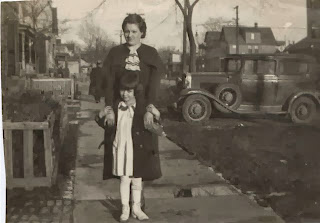
| This is my grandma and my aunt. As you can see, my aunt has a leg brace from polio. The question is, how much of her true life story do I use in my polio novel? |
1—Number of Characters: Many times the real incident had quite a few friends or siblings or cousins or dogs. Often, the heart of the picture book story doesn’t need so many. Your seven-year-old reader doesn’t need Uncle Larry and Milky the Cat in your story. Maybe the character said one funny line you just can't bear to take out. But was that one line something someone else can say in the story? Try melting two characters into one.
2—Setting Details: I know I pride myself on having a good memory. When writing a story based on a real-life experience, you often want to include everything you remember, down to the color of the bathroom shower curtain. Again, is this detail something crucial to the story? Often the writer tries to complicate the layout of the house, yard, etc. because they want the story to take place in the house they grew up in. This can add a lot of superfluous explanation. Change your setting to make it detailed but simple to picture.
3—Plot: The plot can be the biggest obstacle when using a memory to create a story. Sometimes your memory is just a moment in time—no real conflict happened. If you’re really serious about making your book stand out to editors, you need something to happen in your book--a conflict. This can be hard—you’ve written this sweet story about your real cousin, Melba, and her adorable kitten, Jingles. You just can’t make something bad happen them.
I challenge you to find a book (in the same genre you’re writing for) where nothing happens. It’s rare. There are concept books (books on shapes, words, numbers, etc.) as well as night time books where you could argue that nothing happens. But, chances are you pictured the book you are working on as a picture book or a novel. Physically pull from the shelves of your Barnes & Noble, library or kids’ bookshelf books with the look and feel of your potential book. Dissect those books’ plots. Does something happen?
4—Character Names: Do you come from a family of all p-names? Peter, Patty, Pamela, Perry, and Patrick. This might work for some stories, but reading off all these names each time you’re referring to the characters in a book may be distracting to the reader. Often writers try to avoid names that start with the same letter or sound too similar—it can get confusing to the reader (wait, was Brandon the murderer or was Brendon?). You may also have to change a character's name to fit the mood of the book. If it's a serious book, you don't want a somewhat silly-sounding name. If it's a silly book, make it sillier with a fun name.
What it boils down to is keeping your reader in mind. Are the details you’re including necessary and interesting? Are they universal enough that they automatically make sense to the reader? If not, figure out how to cut or change them. You want to make your memory as special to the reader as it was to you.
Monday, December 31, 2012
What to do with Your Old Christmas Cards--Reuse Before You Recycle
In the past, I kept some and recycled the rest. But I’m not big on instantly recycling everything—recycling should really be used as a last resort. Although I’ve thought about sending an e-card rather than a printed card every year, I’m not ready for that. Obviously, my friends aren’t ready to stop sending printed cards either. So what to do with all of these lovely cards…- They cannot accept Hallmark, Disney, or American Greeting cards.
- They do take all types of cards (birthday, Christmas, Easter, etc.).
- Right now are in need of more birthday and thank you cards.
- They only take cards without personal writing on the back of the front of the cards.
![]() |
| After |
Thursday, May 13, 2010
Giving (or Getting) a Gift That Gives Back
Are you a parent that struggles every year with what to get your children’s teachers as an end of the year (or holiday) gift?
As a former teacher, the parents were very generous around the holidays and at the end of the year with presents of appreciation. I would actually have to make multiple trips out to my car to bring them home. Although I was very happy for such generosity, I also felt a little guilty. I often would get things I didn’t need or use and give them away. Lotions and candles are great, but you can only moisturize your hands so many times a day.
Then I got an idea. I knew parents wouldn’t stop altogether with sending a gift, so I that if they wanted to give a gift, a donation to a charity would be wonderful. I even gave suggestions of charities I liked.
On that last day of school, I still received some presents, but many of the families followed my suggestion and donated instead. Some even had their child choose a charity they thought I’d like (I’m into nature, so I received one for the Audubon Society, which was great!).
So parents, if you want to give your children’s teachers a gift they can really appreciate, consider donating. Not only does the money go to a worthy cause (instead of scenting the house with the waxy smell of sugar cookies or lavender), but it teaches your child a lesson in giving. You can also get your child involved by having them think about what charity the teacher would like (or give to a charity your child or family personally supports).
Most charities have ways to easily donate online--simply google the name of the charity. Just think—no more having to shop around for a last minute gift!
And teachers, I hope you’ll think about offering this idea to your parents. All I did was send out a note to the parents in my newsletter. I would recommend doing it about 3 weeks to a month in advance, as one year my parents had already pooled money together for something else.
Below is a list of types of charities I have suggested to my students’ parents or donated to myself. Happy giving!
- American Heart Association: http://www.americanheart.org/presenter.jhtml?identifier=1200000
- Autism Speaks: http://www.autismspeaks.org/
- Ronald McDonald House (offers families a place to stay while their child is being treated for a serious illness or injury in a hospital far away from their home): http://rmhc.org/
- TAILS Humane Society: http://www.tailshumanesociety.org/
- Critter Corral (a guinea pig rescue): http://crittercorral.org/
- Obsessive-Compulsive Foundation: http://ocfoundation.org/
- American Cancer Society: http://www.cancer.org/docroot/home/index.asp
- March of Dimes: http://www.marchofdimes.com/
Tuesday, April 20, 2010
An Earth Day Birthday
Step 1: Paperless invitations. Evite was a quick and easy way to send out invites to the guests with zero waste. I also didn’t have to worry about hand-writing them, mailing labels, money on stamps, licking envelopes, etc.
Step 2: Letting guests know they didn’t need to bring presents. Really, does she need any new toys? Not really. I actually prefer getting her toys at a resale shop.
Step 3: Telling guests if they do bring gifts, to wrap them in previously-used paper or gift bags. Ugghh…I get a stomache seeing the garbage bag of wrapping paper after a party. And usually it goes in the trash! Ughhh!
Step 4: Not using typical disposable plates, cups, and utensils. Here’s where I’m struggling. Because more guests are coming than I have every day plates, glasses, etc. for, I will need to use something in the realm of disposable. I went to Whole Foods and found a line of very cool plates and utensils made from takeout containers, wheat, and other plants. They are also completely biodegradable. I bought them, excited they wouldn’t end up sitting in a landfill. That is, until I remembered I don’t have a compost bin. Without one, the plates would still end up in a landfill. Back to the store I went. This time I bought cups that can be recycled and plates and utensils that can be washed in the dishwasher and reused. I will also be setting out real plates, metal utensils, and glasses for those guests that prefer to use them, such as myself.
Step 5: For party favors, I didn’t want to buy a bunch of junky toys that the kids would play with once and throw away. Instead, I bought seed packets as well as gummy worms to fit the earth theme.
So we’ll see how this Earth Day Birthday goes. If you have ideas for cutting down on party waste, leave a comment.


.jpg)
.jpg)